Wandering as Creative Practice
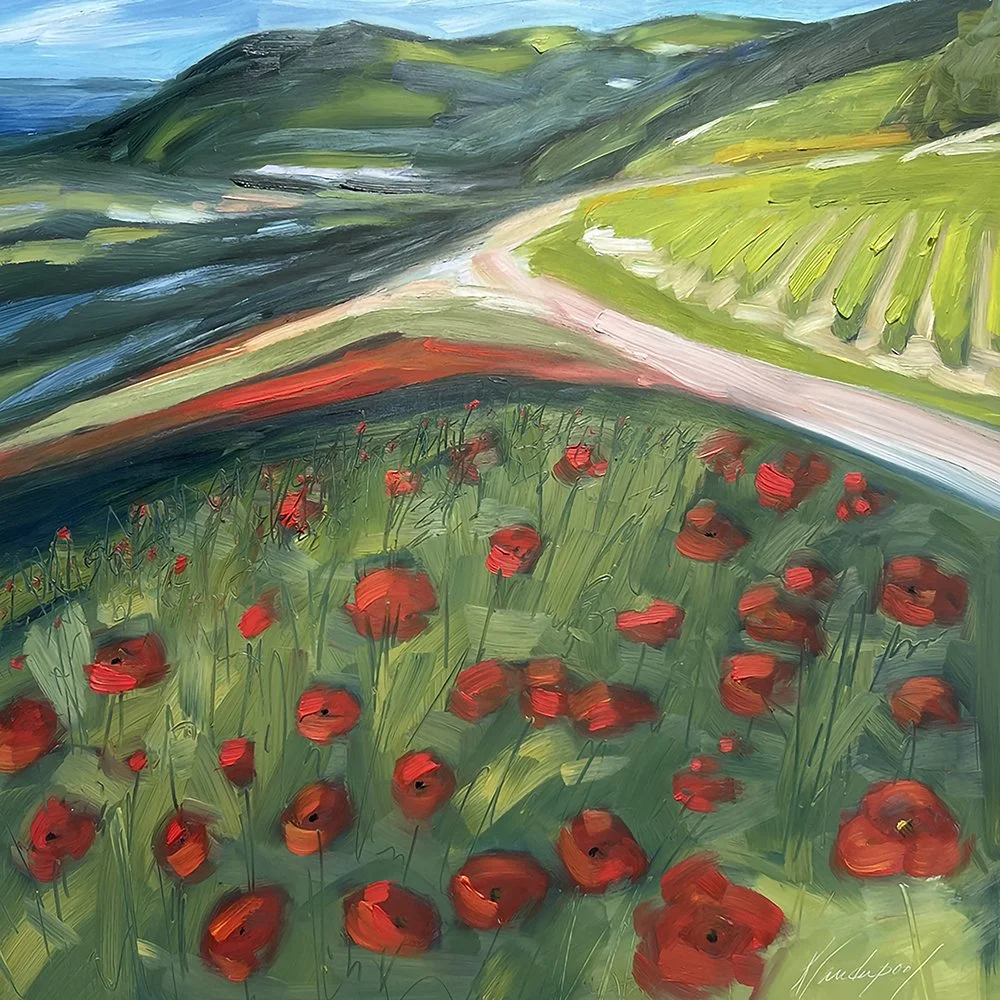
Poppies!
oil on cradled panel, 18 × 18 inches
In my latest series of paintings and ceramics, I explore the idea of wandering as a journey of discovery, exploration, and creativity. This concept starts on the trails and seamlessly transitions into the studio, where movement through physical landscapes mirrors our navigation through ideas, materials, and forms. In this light, wandering becomes a practice of freedom and spontaneity—an open-ended exploration that unfolds through the gestures of painting and the shaping of sculpture.
The Dance of Movement and Thought
Walking has a natural rhythm that propels us forward, yet wandering interrupts this flow. Wandering engages our entire being. It encourages us to pause, look closer, and listen more intently. This isn’t distraction; it’s a refocusing—a call to observe. As we traverse the landscape, our minds explore too, igniting ideas and concepts sparked by the simple act of wandering. Sometimes, a path guides us, but often, wandering invites us to step off the trail, much like the journey of life itself.
This approach mirrors my artistic practice. My work spans multiple mediums, reflecting a lifetime of learning and curiosity. Each medium requires different skills, techniques, and ways of thinking, engaging various parts of our brains and bodies. By allowing ourselves the freedom to wander between these mediums and processes, we often arrive at unexpected and inspiring destinations.
The Art of Exploration
At its core, wandering is about taking the time to explore and discover what lies before us—and noticing what we may have previously overlooked. It engages all our senses: observing, listening, feeling, and smelling. Wandering allows each painting to embody more than just an image; it incorporates changing light, shifting shadows, wind, sounds, and the atmosphere of a place.
When I hike with friends, I often find myself trailing behind. Initially, I keep pace, but gradually, I fall behind as I stop to notice the small wonders along the way: mushrooms in the shade, lizards crossing the path, pollinators traveling from flower to flower, and the textures of leaves and bark. I return to the studio not just with photographs but with rich memories and sensations—the essence of each place.
Finding Rhythm in Stillness
I invite you to wander through my paintings: to move slowly and discover something new. Notice the unexpected color combinations or shapes that emerge on the canvas. Even within the act of painting, wandering becomes part of the process—each idea leading to another, often revealing something entirely unplanned.
Getting lost can be unsettling, but it can also be invigorating.
Nature as Muse
Walking and hiking have long been central to my artistic practice. During these walks, I gather visual inspiration, but the act itself is just as vital. The rhythm of walking can be meditative, creating space for ideas to blossom.
Much of my work has been shaped by my explorations of the Blackland Prairie restoration at White Rock Lake in Dallas. The native plants, insects, birds, and shifting prairie winds create a complex, living ecosystem—one that rewards slow observation.
Recently, I hiked with friends in Provence, gathering fresh inspiration along unfamiliar trails. Once again, I found myself at the back of the group—not just because I’m short and slow, but primarily because I am wandering. I seek out mushrooms and insects along the edges of the path, listen for sounds in the canopy, and feel the textures of dirt and stone beneath my feet.
The Creative Process: Tactile and Transformative
These experiences deeply influence my work in the studio. I reflect on the tactile sensations of materials—how paint glides across the canvas and how clay responds in my hands. Just as wandering invites discovery in the landscape, it opens unexpected paths in the creative process.
Wandering encourages us to move beyond the obvious. It invites us to look beneath the leaves, into the canopy, and all around us. It reminds us that meaningful discoveries often arise when we stray from the expected path.
And sometimes, the most profound insights come from taking a wrong turn.
